Complete visitor guide to the White Palace of Marghazar, its royal history, opening timings, 2026 ticket prices, photography rules and the best half-day plan.
A short history of the White Palace
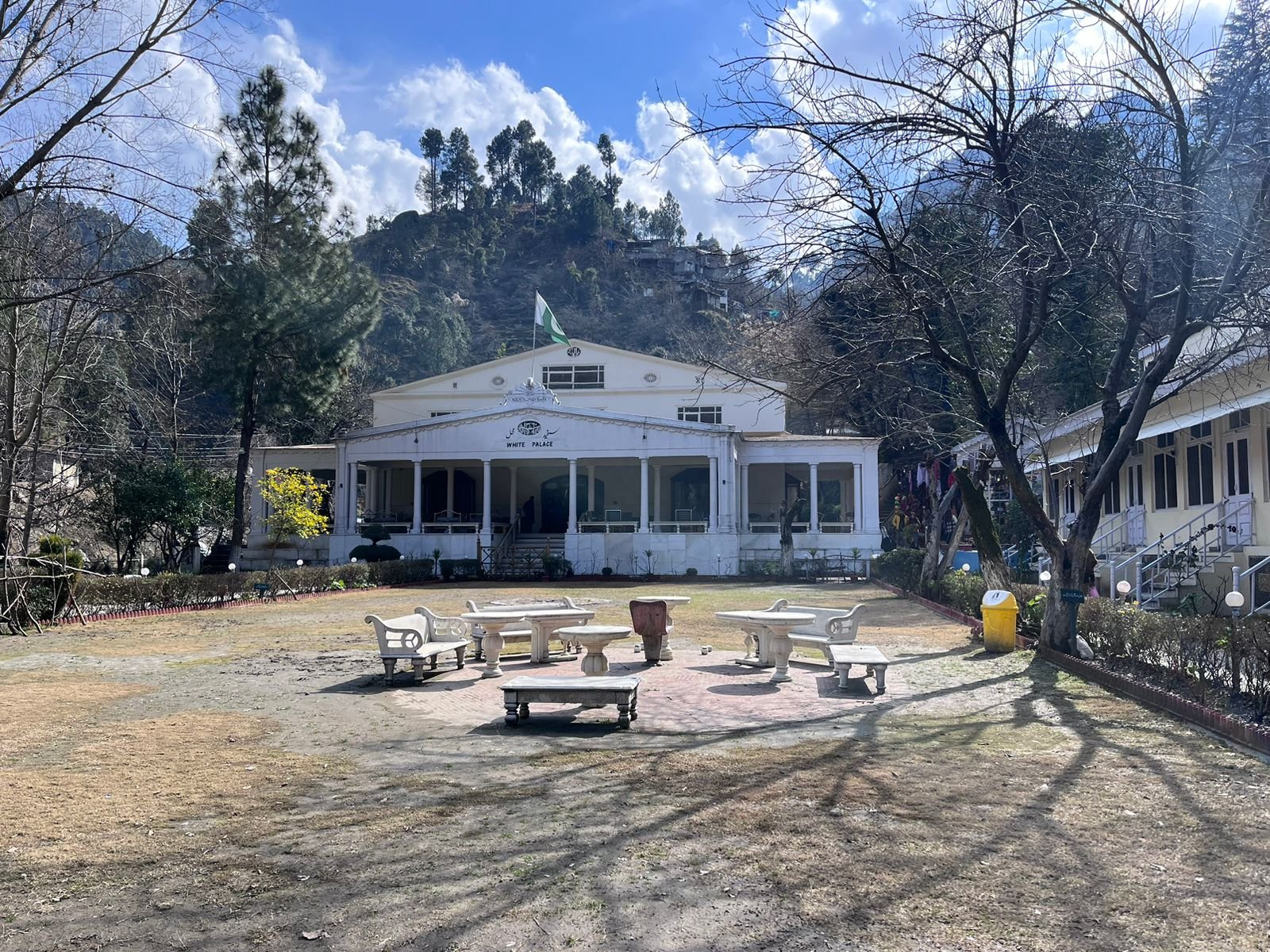
The White Palace of Marghazar (Sufed Mahal) was built in 1941 by Miangul Abdul Wadud, the first Wali (ruler) of Swat State, as the royal summer residence. It is made of pure white marble, carved by craftsmen brought from Agra and Rajasthan. Queen Elizabeth II of the United Kingdom famously stayed here in 1961 during her royal visit to Pakistan. The palace remained in the royal family until Swat State was merged into Pakistan in 1969.
Where Marghazar is located
Marghazar is a small hill station 13 km south of Mingora at an elevation of about 1,330 meters. The road from Saidu Sharif winds uphill through pine forest. The drive from Mingora takes 30 to 40 minutes by car. The White Palace stands on a hilltop with views of the surrounding green slopes. The area is cooler than Mingora and is a favorite local summer escape.
Timings and ticket prices in 2026
The White Palace generally opens 9:00 am to 6:00 pm in summer (April to October) and 10:00 am to 5:00 pm in winter. Ticket price for adults is around PKR 200 to 300, children half. Hotel guests staying inside the palace property may have unrestricted access. Group rates apply for parties of 15 or more. Always confirm current prices at the gate, especially in peak season when small changes occur.
What you can see inside
The main palace building contains preserved royal rooms, the Queen Elizabeth suite where she stayed in 1961 is the highlight. Period furniture, royal portraits and old chandeliers fill the rooms. The exterior gardens are well-kept with flower beds in spring. A photo display in one of the side rooms documents the visits of dignitaries. Allow 60 to 90 minutes for a relaxed visit.
Staying at the White Palace Hotel
Parts of the palace property operate as a heritage hotel. Rooms inside the marble main building are limited and expensive. Typically PKR 25,000 to 60,000 per night for executive suites, but offer a unique royal-stay experience. Nearby cottage rooms in the property grounds are more reasonably priced. Book directly through the hotel website or by phone, several weeks ahead for summer weekends.
How to reach Marghazar
Drive yourself: Mingora to Marghazar is 13 km, 30 to 40 minutes by car, the road is paved. Hire a taxi: PKR 1,500 to 2,500 round trip from Mingora with 2 hours waiting. Shared van: PKR 200 to 300 per seat to Marghazar village from Mingora, then a short uphill walk or local Suzuki to the palace gate. Most visitors do it as a half-day trip from Mingora.
Best season to visit
Spring (April to early June) is gorgeous, the gardens bloom and Marghazar is at its prettiest. Autumn (September to mid-November) is mild and clear. Winter (December to February) is cold, sometimes snowy, with stark beauty if you do not mind low temperatures. Summer monsoon afternoons can be wet. Visit in the morning.
Photography rules and tips
Exterior photography is allowed freely. Interior photography is usually permitted in main public rooms but flash is restricted near old furniture. Always ask the on-site guide before photographing inside any specific room. Drone use is generally not permitted without prior permission. For best photos, arrive within an hour of opening to avoid crowds and harsh midday sunlight.
Combining with other Swat sights
Marghazar pairs well with the Swat Museum at Saidu Sharif (Buddhist Gandhara artifacts) and Fizagat Park along the river. A common half-day plan: morning at Swat Museum, lunch in Mingora, afternoon at White Palace Marghazar, evening back in Mingora. You can also pair Marghazar with a drive to Miandam, another 60 km north, for an overnight in a quiet forest setting.
Practical visitor tips
Wear modest clothing, this is a heritage and family destination. Carry cash for tickets, parking and small purchases. Card machines are not always working. The on-site cafeteria offers basic tea and snacks; for a proper meal, return to Mingora or stop at one of the small restaurants in Marghazar village. Wash rooms are basic but available. There is no formal guide service, most visitors self-tour with the room labels.
Frequently asked questions
Who built the White Palace Marghazar?+
Miangul Abdul Wadud, the first Wali of Swat, built it in 1941 as the royal summer residence.
Did Queen Elizabeth stay at the White Palace?+
Yes. Queen Elizabeth II stayed at the White Palace during her 1961 royal visit to Pakistan.
White Palace Marghazar ticket price 2026?+
About PKR 200 to 300 for adults, children half. Always confirm at the gate.
Can I stay overnight at the White Palace?+
Yes. Part of the property operates as a heritage hotel with rooms inside the main palace and nearby cottages.
How far is Marghazar from Mingora?+
About 13 km south of Mingora, 30 to 40 minutes by car on a paved mountain road.
Best season to visit White Palace?+
Spring (April to early June) and autumn (September to mid-November) offer the most pleasant weather and beautiful surroundings.
Ready when you are
Make Swat feel easy
Dates, hotels, jeep rates, or the best base town — get a clear local answer before you book.