A complete, respectful guide to the living culture of Swat Valley: Pashtun identity and Pashtunwali, language and hospitality, dress, weddings and family life, music and poetry, heritage sites, crafts and bazaars, and the food that ties it all together.
A valley with a deep human character
Most people arrive in Swat for its lakes, rivers and forests, but what stays with them is the character of its people. The valley carries one of the richest cultural layers in northern Pakistan: an ancient Buddhist and Gandhara past, a strong Pashtun identity, the memory of the princely State of Swat, and a daily life still built around family, faith, language and hospitality. Understanding this culture is what turns a scenic trip into a meaningful one, and it costs nothing but attention and respect.
Pashtun identity and Pashtunwali
The majority of Swat is Yousafzai Pashtun, and social life is shaped by Pashtunwali, an unwritten but powerful code of conduct. Its pillars include melmastia (generous hospitality to any guest), nanawatai (offering refuge and forgiveness), badal (justice and balance), and nang (honor and dignity). For a visitor this mostly shows up as remarkable warmth: strangers are welcomed, guests are protected, and a calm, courteous manner is always returned in kind. Honor and reputation matter deeply here, so patience and respect go a long way.
Hospitality you will actually experience
Hospitality in Swat is not a performance for tourists; it is a point of pride. You may be invited for tea after only a short conversation, and refusing too quickly can feel abrupt. In homes and villages, elders are served first, guests are urged to eat generously, and hosts often insist on paying. The polite response is to accept graciously, eat well, thank your host sincerely (a simple "manana" is appreciated), and reciprocate warmth rather than money. These small exchanges are the real heart of Swati culture.
Language, dress and everyday identity
Pashto is the dominant language, while Urdu is widely understood in towns, hotels, schools and transport hubs, and basic English works in tourist areas. Learning a few Pashto words, such as "salam" for hello, "manana" for thank you and "sanga ye" for how are you, earns genuine smiles. Traditional dress remains part of daily identity: men typically wear shalwar kameez with a waistcoat, a pakol cap or a shawl, while women wear long dresses, scarves and beautifully embroidered fabrics. Dressing modestly yourself is both respectful and appreciated.
Weddings, family life and social rhythm
Family is the center of Swati life, and weddings are among the most visible cultural events, built around large extended networks, shared feasts, formal guest reception and carefully observed etiquette between households. Daily rhythm in the villages follows prayer times, orchard and farm work, school routes and seasonal chores, giving rural Swat a slower, warmer pace than the main tourist road. Bazaars double as social spaces where news spreads, relationships are maintained, and visitors get their most honest view of ordinary life.
Music, poetry and oral memory
Pashto culture has a strong artistic and oral tradition. The rabab, a resonant stringed instrument, together with the mangey (a clay pot drum) and folk singing, remains part of cultural memory, especially at private gatherings and celebrations. Pashto poetry, proverbs and storytelling still shape conversation and evening company, and much of Swat's historical memory is carried not only in books but through family stories passed down by elders. If you are invited to hear rabab played live, treat it as the privilege it is.
Heritage that explains the valley
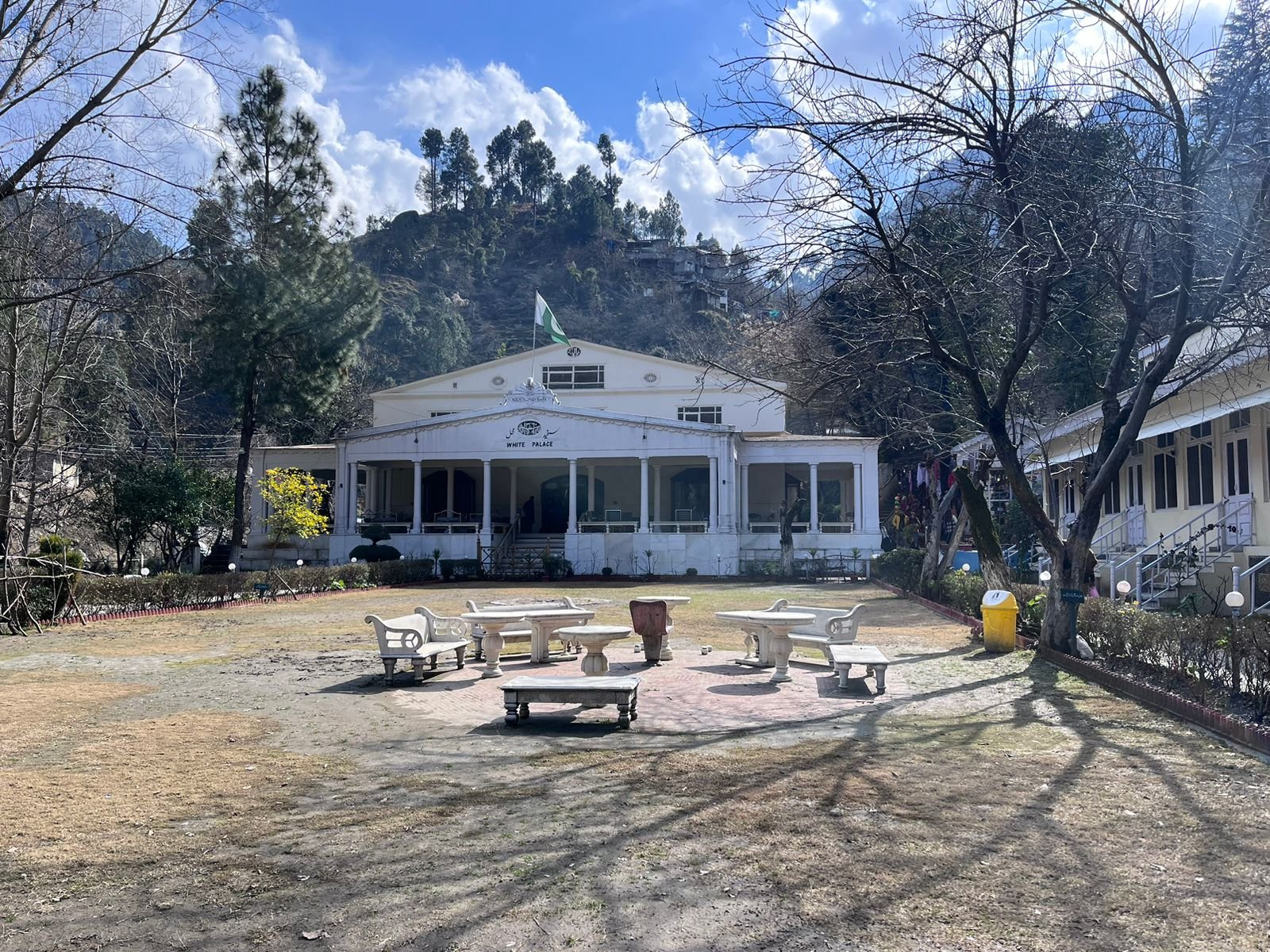
Swat's culture is layered into its landscape. The White Palace at Marghazar, built in 1941 as the summer palace of the Wali of Swat, is the best-known symbol of the state era. Butkara Stupa and the Swat Museum in Saidu Sharif reveal the valley's globally important Buddhist and Gandhara past, while the Jahanabad Buddha rock carving and sites like Amluk Dara give a sense of the ancient monastic world. Mosques and shrines reflect the living Islamic identity that followed. Visiting these with quiet, modest behavior is the best way to read Swat's story.
Crafts, bazaars and meaningful souvenirs
Swat is famous across Pakistan for handwoven shawls, fine embroidery, gemstones and traditional wood carving. The bazaars of Mingora, Matta, Bahrain and Madyan are the place to find them, alongside dry fruit, honey and walnuts. Buying directly from local artisans supports the culture you came to see. When choosing a shawl, check the weave, weight and finish to judge quality, ask whether it is handmade, and compare a few shops before deciding. A genuine Swati shawl or a carved wooden piece is a far better memory than a mass-made trinket.
Food as the thread that ties it together
Food in Swat is social and shared, and it sits at the center of hospitality. Fresh trout from cold mountain streams is the signature dish of upper Swat, best in Kalam and Bahrain where riverside cooks prepare it the same day (it is sold by weight, so confirm the per-kilogram rate first). Everyday Pashto cuisine includes chapli kebab, chicken and mutton karahi, kabuli pulao, grilled kebabs, and fresh tandoori naan and paratha, usually followed by milky chai. Tea itself is a ritual more than a drink, and busy local spots with fast turnover serve the freshest, most authentic meals.
How to experience it respectfully
A little courtesy unlocks the best of Swat. Dress modestly in villages, mosques, shrines and heritage sites; always ask before photographing people, especially women, homes or children; greet elders and shopkeepers with "salam"; accept tea and hospitality politely even if only briefly; remove your shoes where expected; and keep your voice calm in religious and heritage spaces. Carry cash in smaller towns, and never litter near rivers, trails, orchards or monuments. Move through the valley as a respectful guest, and Swat will open up to you in a way scenery alone never could.
Frequently asked questions
What is the culture of Swat Valley like?+
Swat is predominantly Yousafzai Pashtun, with social life shaped by Pashtunwali, a code centered on hospitality, honor, refuge and justice. It blends a deep Buddhist and Gandhara heritage, a strong Pashtun identity, the memory of the State of Swat, and a warm, family-centered daily life.
What is Pashtunwali?+
Pashtunwali is the traditional Pashtun code of conduct. Its key values include melmastia (hospitality), nanawatai (refuge and forgiveness), badal (justice), and nang (honor). For visitors it mostly appears as genuine warmth and protection extended to guests.
How should tourists respect local culture in Swat?+
Dress modestly, ask before photographing people, greet with "salam", accept hospitality graciously, remove shoes where expected, stay calm in religious and heritage spaces, and buy from local artisans. Respect and patience are always returned.
What handicrafts is Swat known for?+
Handwoven shawls, fine embroidery, gemstones and traditional wood carving, famous across Pakistan and best bought directly from artisans in the Mingora, Bahrain and Madyan bazaars.
What food is Swat famous for?+
Fresh trout from mountain streams is the highlight, alongside chapli kebab, karahi, kabuli pulao, fresh tandoori naan and milky chai. Meals are hearty, shared, and central to local hospitality.
What are the main cultural and heritage sites in Swat?+
The White Palace at Marghazar, Butkara Stupa, the Swat Museum in Saidu Sharif, the Jahanabad Buddha rock carving, and various mosques and shrines that reflect the valley's Buddhist, royal and Islamic layers.
Ready when you are
Make Swat feel easy
Dates, hotels, jeep rates, or the best base town — get a clear local answer before you book.